College Football Overtime Rules
College football overtime rules can sometimes be confusing for new fans. Understanding these rules is essential to enjoy the excitement of games that go beyond the regular 60 minutes. Unlike professional football, college football has a unique system to determine a winner if the game is tied at the end of regulation. These rules have evolved over time and continue to change as the NCAA updates its guidelines.
The basic principle of college football overtime rules is simple. Each team gets a chance to possess the ball from a specific point on the field, usually the opponent’s 25-yard line. The team can score touchdowns, field goals, or fail to score, and then the other team gets an equal opportunity. This continues until a winner is determined. Understanding the strategy behind these rules can make games more exciting to watch.
College Football Overtime Rules 2025
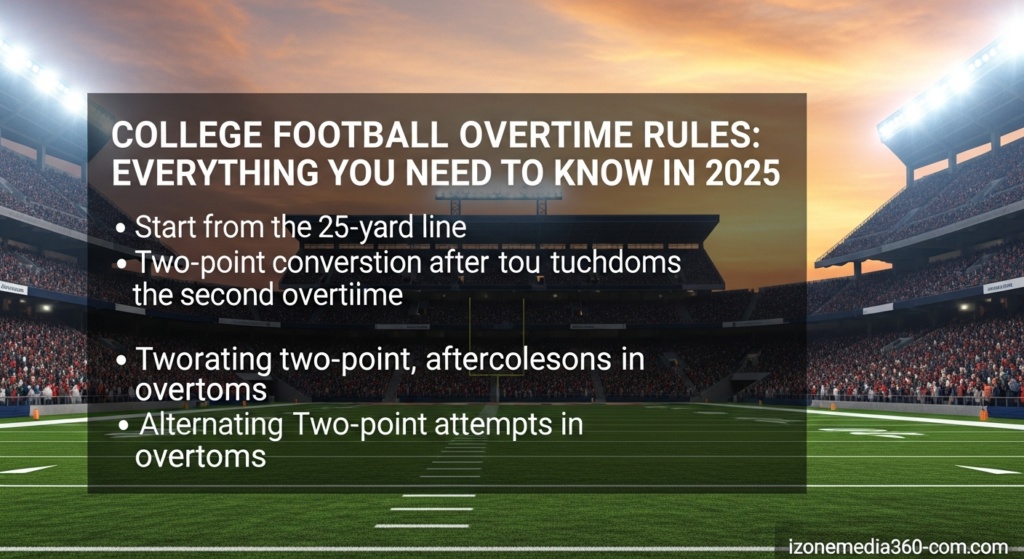
The college football overtime rules 2025 introduce some interesting changes aimed at making the game faster and more thrilling. One of the key adjustments is that teams must attempt a two-point conversion starting from the second overtime. Previously, teams could kick an extra point after a touchdown, but this change encourages more dynamic play and reduces the total number of overtimes.
Additionally, in 2025, there are specific modifications regarding defensive scoring during overtime. Teams can now win the game directly if they score a defensive touchdown in certain situations. These updates ensure that every possession matters and that the overtime format is more competitive. Fans and players alike are adapting to these new regulations, making college football more unpredictable and entertaining.
What Are College Football Overtime Rules
If you are wondering, “what are college football overtime rules,” it is important to know that the rules are designed to give both teams a fair chance to win. Each team starts from the 25-yard line and has one series of downs to score. If the score is tied after the first overtime, the game goes into a second overtime with the same rules but with the added requirement for two-point conversion attempts.
These rules differ from professional football, where overtime can be sudden death. College football ensures that both teams have a chance to possess the ball, which many fans see as fairer and more exciting. Knowing these rules helps fans understand the game better and appreciate the strategic decisions coaches make during overtime.
College Football Overtime Rules NCAA
The NCAA college football overtime rules are the official regulations that all college football teams in the United States follow. The NCAA oversees every aspect of the game, including how overtime is conducted. One major rule is that each team must start its possession at the opponent’s 25-yard line, and there are no game clocks, only play clocks.
Another key part of NCAA rules is that starting from the third overtime, teams are required to attempt a two-point conversion after scoring a touchdown. This was implemented to prevent games from dragging on indefinitely. The NCAA also monitors fair play to ensure that neither team gains an unfair advantage during overtime, which keeps the competition balanced and exciting for fans.
New College Football Overtime Rules
The new college football overtime rules are designed to keep the game safe, fast, and exciting. With changes in 2025, coaches must rethink strategies for scoring and defending during overtime. Two-point conversion rules and defensive scoring possibilities now play a larger role in determining how a game unfolds after regulation time.
The changes also reduce the number of total plays in overtime, which helps protect players from fatigue and injuries. These rules make college football overtime games more dynamic and strategic, providing thrilling moments for both players and spectators.
What Are the College Football Overtime Rules
Many fans ask, “what are the college football overtime rules” because the system is different from what they see in professional leagues. The game starts with both teams having equal chances to score. Each possession continues until a touchdown, field goal, or turnover. If the game remains tied, multiple overtimes can occur.
Strategy plays a big role, as coaches must decide whether to attempt risky plays or safe ones. The college football overtime rules encourage creative strategies and keep fans engaged until the very last moment.
What Is College Football Overtime Rules
College football overtime rules are all about fairness and excitement. Unlike sudden-death rules in other leagues, both teams are guaranteed possession, which allows for thrilling comebacks and strategic gameplay. From the 25-yard line, teams can showcase offensive skills while defenses try to prevent scoring.
Knowing what is college football overtime rules helps fans understand why some games can last much longer than regulation time. Coaches must plan every play carefully, knowing that one mistake could cost the game.
In College Football Overtime Rules
In college football overtime rules, every decision matters. Whether it is choosing to go for a two-point conversion or running a specific play, coaches and players must adapt quickly. Understanding these rules gives fans better insight into the tension and excitement that unfolds during overtime games.
The rules also make college football unique compared to professional leagues. With specific NCAA guidelines and recent updates in 2025, fans are guaranteed entertaining and unpredictable outcomes whenever games go beyond regular time.
FAQs
How does college football overtime work?
In college football, overtime allows each team to possess the ball from the 25-yard line. The team that scores more points in overtime wins the game. If tied, additional overtimes occur until a winner is determined.
Are there new college football overtime rules in 2025?
Yes, starting in 2025, teams must attempt two-point conversions starting from the second overtime, and defensive touchdowns can directly end the game in certain situations.
What is the difference between NCAA and NFL overtime rules?
In the NCAA, both teams are guaranteed possession during overtime, while in the NFL, overtime can end suddenly if one team scores a touchdown on the first possession.
Why are two-point conversions required in overtime?
This rule reduces the total number of overtime plays, keeps the game exciting, and prevents games from extending too long.
Conclusion
College football overtime rules make the game thrilling, fair, and unpredictable. With new changes in 2025, understanding these rules is essential for fans, players, and coaches. From NCAA guidelines to new strategies involving two-point conversions, college football overtime ensures that every game has exciting moments and fair chances for both teams. Whether you are a seasoned fan or new to college football, knowing the overtime rules adds to the enjoyment and intensity of watching these incredible games.